
Как найти вес из объёма
Вес и объем можно связать другой физической величиной, которая используется при расчете обоих вышеуказанных параметров, — массой. Но в одно действия этого не сделать, поэтому следует рассмотреть формулы расчета и объема и веса данного тела.
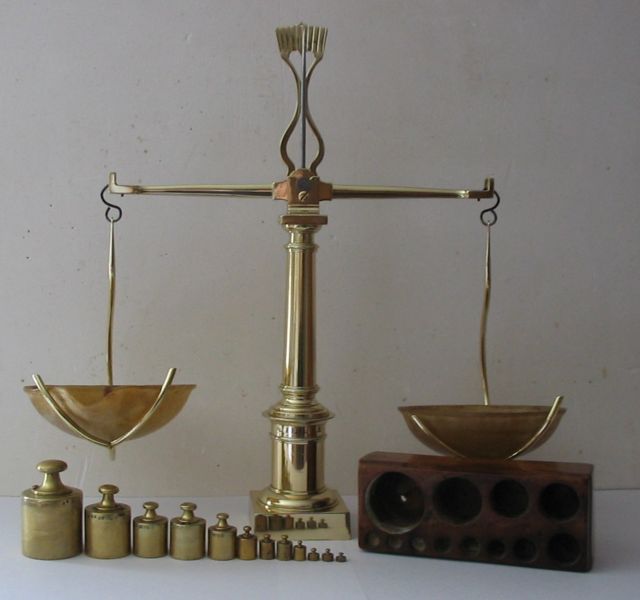
Инструкция
Формула расчета веса тела имеет вид: P=m*g, где P- вес тела, m – масса тела, g – ускорение свободного падения. Объема в этой формуле нет, значит, его надо связать с величинами, указанными в формуле, например, массой. Выводить ускорение свободного падения нельзя, так как оно – константная величина, равная 9,8 Н/кг (Ньютон, деленный на килограмм).Объем и масса тела объединены другой физической формулой: V= m /ρ, где m – масса, V – объем тела, ρ – плотность вещества, постоянная табличная величина для конкретных веществ. Запишите ее в удобном для работы виде: m = V*ρ
Подставьте формулу массы (m = V*ρ) в формулу веса тела (P=m*g), получится новая формула для расчета веса указанного тела: P=V*ρ*g. Вот и получилась расчетная формула веса тела через его объем. В ней ускорение свободного падения, g, и плотность, ρ, являются постоянными величинами (плотность только для этого тела). Стала видна прямая зависимость между объемом и весом тела. Чем больше объем тела, тем больше его вес.
Пример решения задачи. Найдите вес стеклянного шара объемом 0,2 м^3 (кубических метра).
Решение. В данном условии известны три величины: объем (V=0,2 м^3), ускорение свободного падения (9,8 Н/кг) и плотность, которая определяется в таблице по веществу, из которого тело состоит, (плотность стекла ρ = 2500 кг/ м^3). P=V*ρ*g = 0,2 м^3*2500 кг/ м^3*9,8 Н/кг = 4900 Н. При работе с единицами измерения: сократите кубические метры и килограммы, остаются ньютоны – единица измерения силы. Вес тела – это сила, поэтому измеряется в ньютонах.
Обратите внимание
Вес тела и масса тела – это две разные физические величины, имеющие разные характеристики.
Полезный совет
Принято использование округленного значения ускорения свободного падения, оно равно 10 Н/кг.
Таблицу плотностей можно найти в любом учебнике седьмого класса или физическом справочнике.
Войти на сайт
или
Забыли пароль?
Еще не зарегистрированы?
This site is protected by reCAPTCHA and the Google Privacy Policy and Terms of Service apply.

Download Article
Download Article
Have you ever had questions about mass or how to find the weight of the object itself? Well, scroll down to Step 1 to find the weight of an object without using a scale to weigh the object.
-

1
Figure out the volume of the object. Let’s say you have a cube with a dimension of 10x10x10. The volume would be 1000.[1]
-
2
Use the formula mass equals density times volume. This requires you to know the density of the object. If the object is water, for example, you know it has a density of 1 gram (0.035 oz) per cubic centimetres. So for a volume of water of 1000 cc, the weight is 1000 grams.[2]
Advertisement
-
3
Know the density of different matters:[3]
- Gold — 19.32
- Lead — 11.3437
- Silver — 10.5020
- Copper — 8.5 to 8.8
- Steel — 7.9
- Iron — 7.4 to 7.7
- Aluminium — 2.7
- Limestone 2.6 to 2.8
- Glass — 2.4 to 2.8
- Brick — 1.4 to 2.2
- Concrete — 2.2 to 2.5
- Ice — 0.9
- Wax — 0.9
- Pinewood — 0.5
- Mercury — 13.543
- Seawater — 1.03
- Water — 1.0
- Petrol — 0.85


Advertisement
Note that this method is only used by astronauts to measure a spaceship. This won’t work in daily life, because resistance is everywhere.
-
1
Figure out the object’s acceleration.
-
2
Figure out the mass through the force exerted. Do this by dividing the acceleration by the force exerted (by Newton’s second law: force equals mass times acceleration).[4]
- For example, if a cube has an acceleration of 1000 millimetres per second squared (always measure in millimetres) and the force exerted is 2 kilograms millimetres per second squared, then the cube must weigh 2 grams.


Advertisement
-
1
Balance a balance with lightweight, identical cups at both ends. This can be a ruler balanced on an object, or a string over something with little friction with cups tied at both ends.[5]
-
2
Place the object at one end, and fill the other cup with pure water until it balances with the object. If the object is too light to find the weight this way, you’ll need to either decrease the friction at the pulley or at the fulcrum, or use lighter-weight materials for the balance and cups.[6]
-
3
Measure the volume of the matching water, and convert to milliliters. The volume in milliliters is the same as the weight in grams.[7]


Advertisement
Add New Question
-
Question
Why is it recommended to use millimeters when a meter is an SI basic unit? Wouldn’t it be easier? Unit-conversion wise, to measure in mm but convert it into m before calculating?

You cannot find weight with length measurements on their own. You need other information such as weight for a specific cubic capacity.
-
Question
What is the mass of a 2 centimeter wide rubber ball?
It depends upon the density of the rubber; it will vary depending on how many air bubbles were inside the rubber when it was produced.
-
Question
I need to work out the weight of a large accent table but I don’t have a large enough scale. Is it possible to use the dimensions to determine the weight?
Not really, because it depends on the type and density of the material(s) it is made out of.


See more answers
Ask a Question
200 characters left
Include your email address to get a message when this question is answered.
Submit
Advertisement
-
When measuring an object, always remember to find the volume the right way. No short cuts.
-
You can measure the volume by putting the object gently in the water. Make sure it is covered by water. Measure the volume of water pushed out, and that equals to the volume of the object.
Thanks for submitting a tip for review!
Advertisement
-
Use the first example for objects that you use in your everyday life.
Advertisement
Things You’ll Need
- Ruler or the information given to you from the instructor (optional)
- Any liquid (water is good)
- Paper to work it out on
- Pencil/pen
References
About This Article
Article SummaryX
While a scale is the most accurate way to find the weight of an object, you can get an approximation by using a handmade balance. To start, tie string to the top of 1 cup, then tie the end of the string to the top of another cup. Balance the middle of the string over a tall, solid object so the cups can hang freely. Place the object you want to weigh in 1 cup, then fill the other cup with water until it balances with the object. Then, measure the amount of water you put in the cup in milliliters. The number of milliliters of water will equal the number of grams the object weighs. For example, if you put in 5 milliliters of water in, that means your object weighs 5 grams. To learn how to find the volume of your object, read on!
Did this summary help you?
Thanks to all authors for creating a page that has been read 221,784 times.
Did this article help you?
Как найти вес тела если известен объем?
Найдите правильный ответ на вопрос ✅ «Как найти вес тела если известен объем? …» по предмету 📘 Физика, а если вы сомневаетесь в правильности ответов или ответ отсутствует, то попробуйте воспользоваться умным поиском на сайте и найти ответы на похожие вопросы.
Смотреть другие ответы
Онлайн калькулятор поможет перевести объём в массу и наоборот массу перевести в объём. Для произведения расчетов необходимо знать объём (в см3, дм3, м3, мл, л на выбор) и плотность (в г/см3, г/м3, кг/см3, кг/м3, т/м3, кг/л на выбор).
Определить плотность некоторых веществ можно в таблице под калькулятором.
Формула для перевода объёма в массу: M = V × P
Формула для перевода массы в объём: V = M / P
Где: M — масса; V — объем; P — плотность.
×
Пожалуйста напишите с чем связна такая низкая оценка:
×
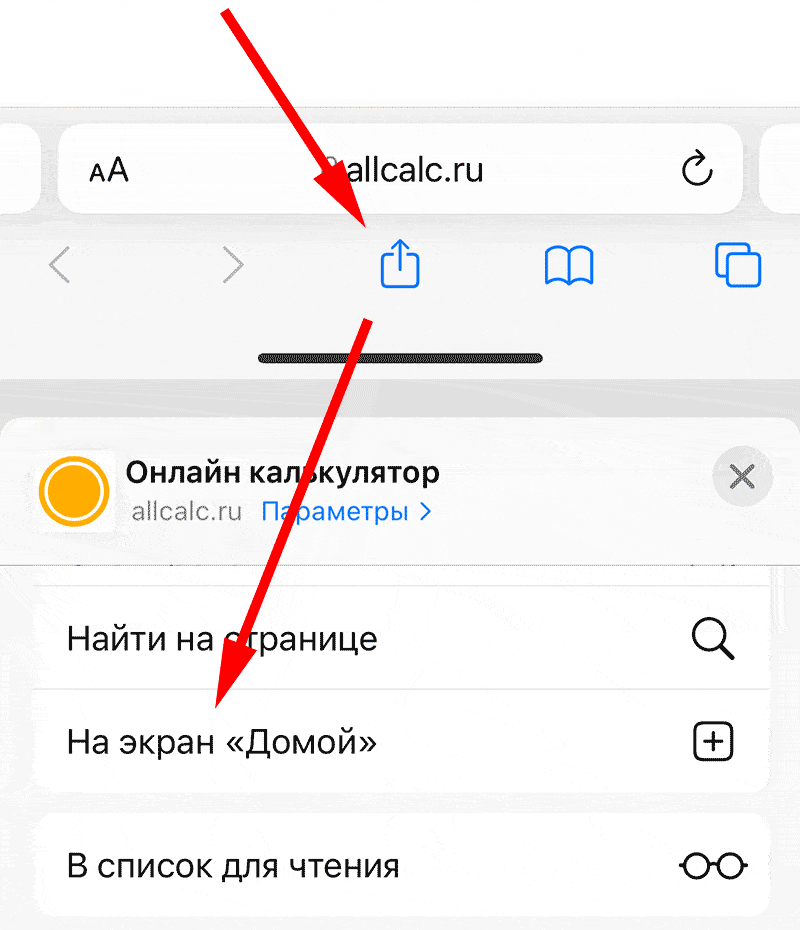
Для установки калькулятора на iPhone — просто добавьте страницу
«На главный экран»
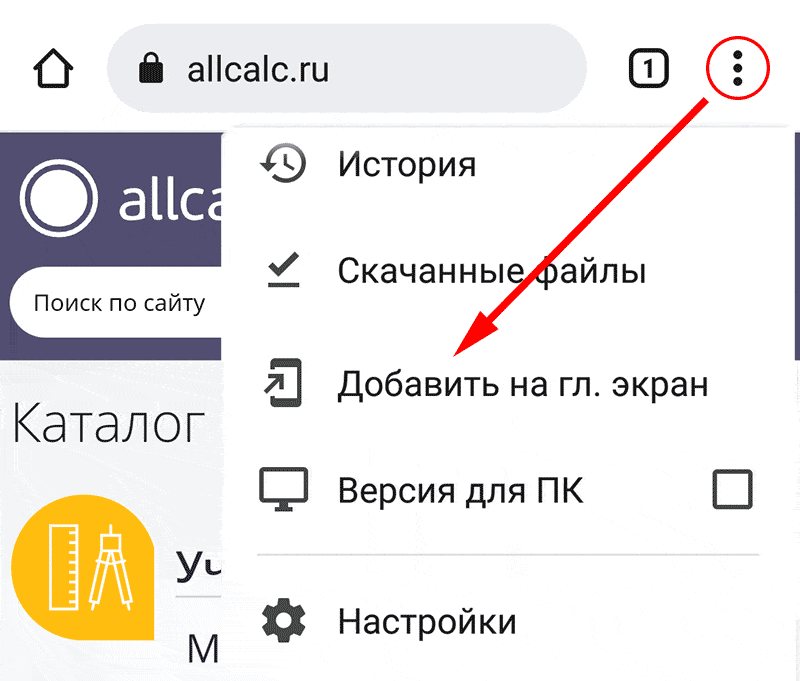
Для установки калькулятора на Android — просто добавьте страницу
«На главный экран»
» 2015 » Сентябрь » 29 » Как найти вес объекта без весов
|
02:30 Как найти вес объекта без весов |
Как найти вес объекта без весов2 методика:Найти вес через объёмНайдите вес с помощью применения силы Если вы хотите узнать массу объекта, но у вас нет весов, в этой статье мы расскажем вам, как это сделать. Шаги
Метод 1 из 2: Найти вес через объём
|
Категория: Вопросы и ответы | | Рейтинг: 0.0/0 |


Добавлять комментарии могут только зарегистрированные пользователи.
[
Регистрация
|
Вход
]